Welcome! This manual guides you through setup, operation, and maintenance of your new Bosch refrigerator, ensuring optimal performance and longevity.
Registering your appliance on MyBosch (bosch-home.com/) unlocks exclusive benefits and support, streamlining your ownership experience from day one.
This comprehensive guide, dated today, 04/07/2026 14:48:17, provides essential information for safe and efficient use, referencing available resources like ManualsLib.
Welcome and Important Safety Information
Welcome to the Bosch family! We’re thrilled you’ve chosen a Bosch refrigerator. Your safety and satisfaction are our top priorities. Before operating your appliance, please carefully read this section and the entire user manual for crucial safety guidelines.
Important Safety Instructions: Risk of fire or electric shock exists if safety precautions aren’t followed. Never attempt repairs yourself; contact qualified service personnel. Do not modify the appliance. Be aware that refrigerant flows through pipes during operation, and the motor, switches, or solenoid valves will cycle on and off – this is normal and requires no action.
Ensure proper grounding. Avoid storing flammable substances near the refrigerator. Regularly check removable fittings for wobbling or sticking. Prevent bottles or containers from touching to avoid breakage. The light source is readily available as a spare part. Always prioritize responsible disposal and consult the EU energy label and EPREL product database for energy efficiency information.
About This User Manual
This user manual is designed to be your comprehensive guide to understanding and utilizing all the features of your Bosch refrigerator. It contains detailed instructions for installation, operation, maintenance, and troubleshooting, ensuring years of reliable performance. We strongly recommend keeping this manual readily accessible for future reference.
Throughout this manual, you’ll find important safety warnings, indicated by specific symbols, to prevent potential hazards. Pay close attention to these warnings to ensure safe operation. This manual references resources like MyBosch (bosch-home.com/) for registration and support, and ManualsLib for downloadable versions.
Please note the date of this manual – 04/07/2026 – as updates may occur. Do not switch off the refrigerator during updates. This manual aims to empower you with the knowledge to maximize your appliance’s efficiency and longevity, adhering to EU energy label standards and responsible disposal practices.
Getting Started: Installation & Setup
Begin with care! Carefully unpack, inspect for damage, choose a suitable location, level the unit, and connect to power for optimal operation.
Unpacking and Initial Inspection
Carefully remove all packaging materials, including tape, cardboard, and protective film, from your new Bosch refrigerator. Inspect the appliance thoroughly for any visible signs of damage that may have occurred during shipping. This includes dents, scratches, or broken components.
Verify that all included accessories, such as shelves, door bins, and the ice maker kit (if applicable), are present and undamaged. Compare the contents against the packing list provided with your refrigerator.
If any damage is detected, immediately contact the retailer or Bosch customer support and do not attempt to operate the appliance. Retain all packaging materials until the inspection is complete. Proper documentation of any damage is crucial for a successful claim. Ensure the refrigerator is placed on a protective surface during inspection to prevent further scratches.
Choosing the Right Location
Select a location for your Bosch refrigerator that is well-ventilated, level, and away from direct sunlight or heat sources like ovens and radiators. Maintaining adequate airflow around the appliance is crucial for efficient operation and preventing overheating. Avoid placing the refrigerator in a damp or humid environment.
Ensure there is sufficient space around the refrigerator for door opening and closing, as well as for accessing the rear for maintenance. The floor must be strong enough to support the refrigerator’s weight, especially when fully loaded.
Do not install the refrigerator near flammable materials or gases. Consider the proximity to a grounded electrical outlet for easy connection. A stable and level surface is paramount for optimal performance and minimizing noise.
Leveling the Refrigerator
Proper leveling is essential for ensuring your Bosch refrigerator operates quietly and efficiently. Use a spirit level to check both the side-to-side and front-to-back alignment. Most Bosch refrigerators feature adjustable feet at the bottom corners; rotate these feet to raise or lower each side until the refrigerator is perfectly level.
An unleveled refrigerator can cause doors to not close properly, leading to temperature inconsistencies and increased energy consumption. It may also generate unwanted vibrations and noise.
After adjusting the feet, firmly tighten the locking nuts to secure the refrigerator’s position. Re-check the leveling periodically, especially after moving the appliance. A stable, level base contributes significantly to the longevity and performance of your Bosch refrigerator.
Connecting to Power
Before connecting your Bosch refrigerator to a power source, ensure the voltage and frequency of your household supply match the specifications listed on the appliance’s rating plate – typically found inside the refrigerator compartment. Use a dedicated, properly grounded electrical outlet; avoid extension cords or adapters.
Do not switch the refrigerator on during updates, as this could cause serious damage. Ensure the power cord is not pinched or damaged during installation. A damaged cord presents a safety hazard and must be replaced by a qualified technician.
Once connected, allow the refrigerator several hours to reach its optimal operating temperature before loading it with food. Refer to the temperature control settings section for guidance on initial temperature adjustments.
Understanding Your Refrigerator’s Features
Explore the innovative design! Discover adjustable shelves, door bins, and specialized storage, alongside intuitive temperature controls and a bright, efficient lighting system.
Interior Layout and Adjustable Shelves
Maximizing Space & Flexibility: Your Bosch refrigerator’s interior is thoughtfully designed for optimal organization and storage capacity. The layout features a variety of shelves, bins, and compartments engineered to accommodate items of all shapes and sizes, ensuring efficient use of available space.
A key feature is the adjustable shelving system; These shelves can be easily repositioned to create custom configurations, allowing you to store taller items – like pitchers or large containers – without difficulty. Simply lift and relocate the shelves to the desired height, adapting the interior to your specific needs.
Beyond adjustability, many models include spill-proof shelves designed to contain accidental spills, simplifying cleanup and preventing contamination of other food items. The strategic placement of shelves and bins promotes airflow, contributing to consistent temperature distribution throughout the refrigerator compartment. This helps maintain food freshness and quality for longer periods.
Consider utilizing the available space effectively by grouping similar items together and utilizing the door bins for frequently accessed items.
Door Bins and Storage Options
Versatile Door Storage: The door of your Bosch refrigerator offers a variety of bins and compartments designed for convenient storage of frequently used items. These bins are strategically sized and positioned to maximize space and accessibility, keeping essentials within easy reach.
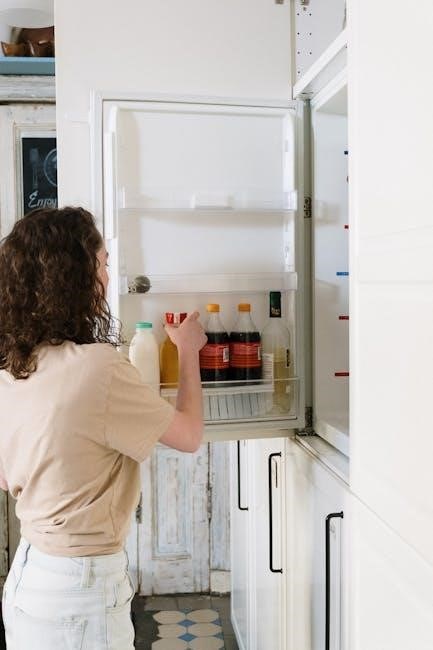
You’ll find adjustable door bins, allowing you to customize the configuration to accommodate bottles, jars, and cartons of varying sizes. Larger, deeper bins are ideal for gallon-sized containers, while smaller bins are perfect for condiments, dressings, and beverages. Some models feature specialized door bins designed for eggs or dairy products, providing secure and organized storage.
Beyond standard bins, certain Bosch refrigerators include a dedicated dairy compartment, maintaining a slightly warmer temperature ideal for preserving the freshness of butter and cheese. Utilizing these door storage options frees up valuable shelf space inside the main refrigerator compartment, enhancing overall organization and efficiency.
Regularly check and rearrange items in the door bins to ensure optimal freshness and prevent forgotten items from expiring.
Temperature Control Settings
Precise Temperature Management: Your Bosch refrigerator features intuitive temperature control settings, allowing you to maintain optimal conditions for preserving food freshness. The control panel typically includes separate settings for the refrigerator and freezer compartments, enabling independent temperature adjustments.
Digital displays clearly indicate the current temperature settings, and easy-to-use buttons or touchscreens facilitate precise adjustments. Recommended refrigerator temperature is between 37°F (3°C) and 40°F (4°C), while the freezer should be set to 0°F (-18°C) for optimal food preservation.
Some models offer specialized settings like ‘Super Cooling’ for rapidly chilling newly added groceries, or ‘Holiday Mode’ to conserve energy during extended absences. Understanding and utilizing these settings ensures your Bosch refrigerator operates efficiently and effectively, safeguarding the quality and longevity of your food.
Avoid frequent temperature adjustments, as this can impact performance.
Lighting System
Enhanced Visibility: Your Bosch refrigerator is equipped with a modern lighting system designed to illuminate the interior, making it easy to locate items, even those stored in the back. Typically, this utilizes bright, energy-efficient LED lighting, providing superior illumination compared to traditional incandescent bulbs.
The lighting automatically activates when the door is opened, and deactivates when closed, conserving energy. In some models, the light source is readily available as a spare part, ensuring easy replacement if needed. The LED technology offers a long lifespan, reducing the frequency of bulb changes.
Consistent and even lighting throughout the refrigerator compartment enhances visibility and simplifies organization. This feature contributes to a more user-friendly experience, allowing you to quickly and efficiently manage your food storage. Enjoy the convenience of a well-lit refrigerator interior!
Operating Your Refrigerator
Effortless Control: This section details how to effectively utilize your Bosch refrigerator’s features, including temperature settings, special functions, and ice/water options.
Setting the Temperature
Precise Temperature Control: Your Bosch refrigerator offers intuitive temperature management for optimal food preservation. The control panel allows you to independently adjust the refrigerator and freezer compartments, ensuring ideal conditions for various food types.
Typically, a recommended refrigerator temperature is between 34°F (1°C) and 40°F (4°C), while the freezer should be maintained at 0°F (-18°C); However, these settings can be adjusted based on your specific needs and storage contents.
To adjust the temperature, use the digital display or control buttons. Allow 24 hours for the temperature to stabilize after any adjustments. Avoid frequent temperature changes, as this can impact energy efficiency and food quality.
Some models feature ‘Super Cooling’ or ‘Super Freezing’ functions for rapidly chilling new groceries, preserving their freshness and nutritional value. Remember to deactivate these functions after a few hours to conserve energy.
Using Special Functions (e.g., Super Cooling, Holiday Mode)
Enhanced Features for Convenience: Your Bosch refrigerator incorporates specialized functions to optimize performance and energy consumption. ‘Super Cooling’ rapidly lowers the refrigerator temperature when adding fresh groceries, preserving flavor and nutrients.
Activate ‘Super Freezing’ before adding a large quantity of food to the freezer; it prevents temperature increases and ensures quick freezing. Remember to deactivate these ‘Super’ functions after a few hours to return to normal operation and conserve energy.
‘Holiday Mode’ is ideal for extended absences. It maintains a higher freezer temperature while minimizing refrigerator energy use, preventing odors and protecting frozen goods.
Consult your specific model’s control panel for detailed instructions on activating and deactivating these functions. Proper utilization of these features enhances your refrigerator’s efficiency and food preservation capabilities.
Ice Maker and Water Dispenser (if applicable)
Convenient Refreshments: If your Bosch refrigerator model includes an ice maker and water dispenser, ensure the water supply is properly connected and the system is initialized according to the installation instructions.
The ice maker automatically produces ice, but initial production may take several hours. Discard the first few batches of ice to remove any impurities. Regularly check the water filter and replace it as recommended to maintain water quality and ice production.
The water dispenser provides filtered water on demand. Ensure the dispenser lock is engaged when not in use to prevent accidental dispensing.
For optimal performance, avoid freezing water in ice cube trays within the ice maker compartment; Refer to the troubleshooting section if you experience issues with ice production or water dispensing.
Maintenance and Cleaning
Preserving Freshness: Regular cleaning ensures optimal performance and hygiene; follow the outlined procedures for defrosting, filter replacement, and general upkeep of your Bosch refrigerator.
Regular Cleaning Procedures
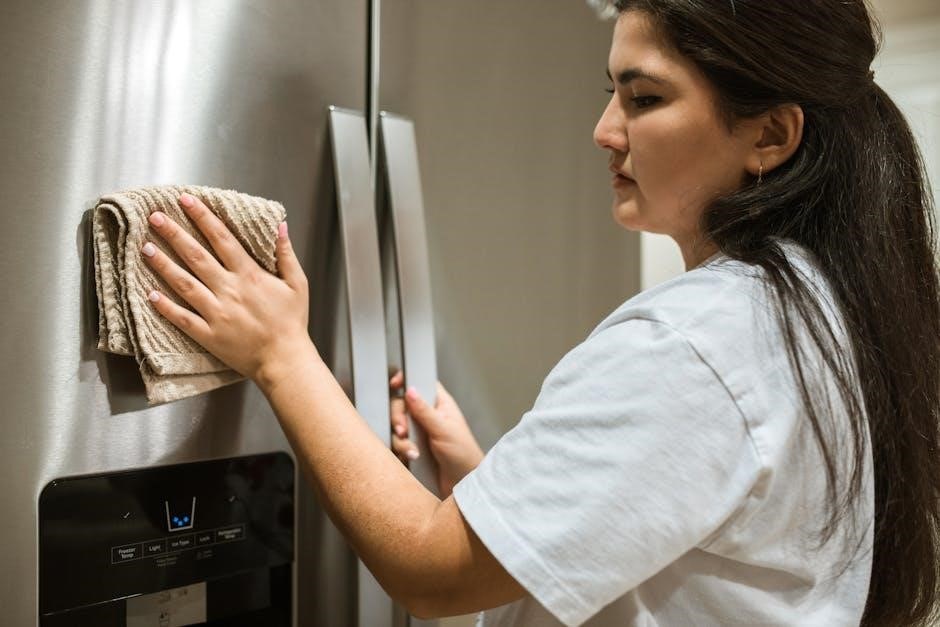
Maintaining a pristine interior is crucial for food safety and refrigerator efficiency. Disconnect power before commencing any cleaning. Remove all shelves, drawers, and door bins, washing them with warm, soapy water; rinse thoroughly and dry completely before replacing.
Wipe down the refrigerator’s interior surfaces – walls, ceiling, and floor – with a solution of baking soda and water (approximately 1 tablespoon of baking soda per quart of water). This neutralizes odors and gently cleans.
Pay attention to door seals, cleaning them with a damp cloth to ensure a tight seal. Avoid abrasive cleaners, as they can damage surfaces. For stubborn stains, a mild, non-abrasive cleaner may be used, followed by a clean water rinse.
Clean the exterior with a damp cloth and mild detergent. Regularly vacuum the condenser coils (typically located at the back or bottom of the refrigerator) to remove dust, improving cooling performance.
Defrosting (if applicable)
If your Bosch refrigerator features a manual defrost system, periodic defrosting is necessary to prevent ice buildup, which reduces cooling efficiency. Begin by disconnecting the refrigerator from the power supply. Remove all food items and store them appropriately to maintain temperature.
Place towels or containers at the base of the refrigerator to collect melting water. Leave the door open to accelerate the defrosting process. Do not use sharp objects to scrape away ice, as this can damage the interior lining.
Once all ice has melted, thoroughly wipe down the interior with a clean, dry cloth. Ensure no water remains before reconnecting the refrigerator to the power supply and returning food items.
Modern Bosch refrigerators often feature automatic defrost; consult your specific model’s features to determine if manual defrosting is required. Regular cleaning aids in preventing excessive ice formation.
Replacing the Water Filter (if applicable)
Maintaining optimal water quality requires regular replacement of your Bosch refrigerator’s water filter. The frequency depends on water quality and usage, typically every six months. Locate the filter, usually within the refrigerator compartment or behind a grille.
Before replacing, shut off the water supply to the refrigerator. Gently twist and remove the old filter, noting the direction for proper re-installation. Some models may require a quarter-turn release.
Prepare the new filter by following the instructions on its packaging – often involving soaking in water. Align the new filter and twist it into place until secure.
Turn the water supply back on and flush the system by dispensing water for several minutes to remove any air or loose particles. Refer to your model’s specific instructions for detailed guidance.
Troubleshooting Common Issues
Addressing concerns promptly ensures continued optimal performance. Common issues include cooling problems, unusual noises, or water leaks; solutions are detailed within this section.
Refrigerator Not Cooling
If your Bosch refrigerator isn’t cooling adequately, several factors could be at play. First, verify the temperature settings are correctly adjusted – accidental changes happen! Ensure the refrigerator door is sealing properly; check for obstructions preventing a tight closure.
Next, examine the condenser coils, typically located at the back or bottom of the unit. Dust accumulation hinders heat dissipation, reducing cooling efficiency. Clean them thoroughly with a vacuum cleaner brush attachment.
Listen for the compressor; if it’s not running, a power issue or compressor failure might be the cause. Also, confirm the refrigerator hasn’t been switched off during any software updates, as this can temporarily interrupt operation.
If the issue persists, consult the full operating and installation manual available on ManualsLib for detailed troubleshooting steps specific to your model. Remember refrigerant flows naturally through the system.
Unusual Noises
Hearing strange sounds from your Bosch refrigerator? Don’t immediately panic! Many noises are normal operational sounds. The motor, switches, and solenoid valves cycle on and off during operation – these are expected. However, persistent or loud noises warrant investigation.
Check if bottles or containers inside are touching, causing rattling. Also, inspect removable fittings; wobbling or sticking components can generate noise. Ensure the refrigerator is level, as an uneven stance can amplify vibrations.
If you hear a buzzing sound, it could indicate a problem with the defrost system. A clicking noise might be related to the compressor starting or stopping. Refer to your refrigerator’s operating and installation manual (available on ManualsLib) for a detailed noise guide specific to your model.
Ignoring unusual sounds could lead to more significant issues, so address them promptly.
Water Leaks
Discovering water around your Bosch refrigerator can be concerning! First, check the drain tube located at the back of the refrigerator; it may be clogged, preventing proper water drainage. Ensure the water supply line to the ice maker (if equipped) is securely connected and undamaged.
Inspect the door seals for any cracks or gaps, as compromised seals can lead to condensation and leaks. Verify the refrigerator is level, as an unlevel unit can disrupt water flow. Also, confirm the defrost drain isn’t frozen, blocking water passage.
Consult your Bosch refrigerator’s operating and installation manual (found on resources like ManualsLib) for specific troubleshooting steps related to water leaks for your model. Addressing leaks promptly prevents water damage and potential mold growth.
Energy Efficiency and Environmental Information
Bosch prioritizes sustainability! Explore EU energy label details and the EPREL product database for energy consumption data, alongside responsible disposal guidelines.
EU Energy Label Information
Understanding the EU Energy Label is crucial for informed appliance selection. This label, prominently displayed on your Bosch refrigerator, provides a standardized overview of its energy efficiency performance, allowing for easy comparison with other models.
Key information includes the energy efficiency class (ranging from A to G, with A being the most efficient), annual energy consumption in kilowatt-hours (kWh), and the climate class indicating suitable ambient temperatures for operation.
The label also details the total net capacity of both the refrigerator and freezer compartments, alongside noise emission levels measured in decibels (dB). Furthermore, it specifies the type of refrigerant used, contributing to environmental impact assessment.
Refer to the energy label and accompanying documentation for precise details specific to your Bosch refrigerator model. You can also find additional information within the EPREL product database, offering a comprehensive resource for energy-related data.
EPREL Product Database
The EPREL (European Product Registry for Energy Labelling) database is a vital resource for detailed information about your Bosch refrigerator’s energy performance and product characteristics. It’s a publicly accessible online database established to enhance transparency and facilitate informed purchasing decisions.
Within EPREL, you can locate your specific refrigerator model using its model number, readily found on the appliance’s rating plate. The database provides access to the official EU energy label information, including annual energy consumption, storage capacity, and noise emissions.
Beyond the label data, EPREL offers technical documentation, performance test reports, and other relevant details. This allows for a deeper understanding of your refrigerator’s efficiency and environmental impact. Access EPREL through the official European Commission website to explore comprehensive product data.
Responsible Disposal
Proper disposal of your old Bosch refrigerator is crucial for environmental protection and resource conservation. Refrigerators contain refrigerants and other materials requiring specialized handling to prevent harm to the ozone layer and potential pollution.
Do not simply discard your refrigerator with regular household waste. Instead, contact your local waste management authority or a certified recycling center to arrange for responsible disposal. Many municipalities offer appliance recycling programs or collection events.
Ensure the refrigerant is safely removed by qualified personnel before disposal, adhering to all applicable regulations. By participating in responsible recycling, you contribute to a circular economy and minimize the environmental footprint of your appliance’s lifecycle.