
Overview of AQA English Language GCSE

AQA leads English Language GCSEs, offering a comprehensive curriculum that blends traditional literature with contemporary media. Students tackle diverse texts, develop analytical skills, and practice creative writing, all aligned with national standards and rigorous assessment criteria. AQA’s framework.

Purpose and Scope of the Qualification
English Language GCSE by AQA equips learners with strong reading and writing skills needed for further study and everyday life; The curriculum covers a range of texts from classic literature to modern media, news, and essays, helping students understand different styles and viewpoints. The qualification aims to develop analytical thinking and clear expression. Learners learn to break down passages, spot themes, and assess rhetorical choices. They practice building arguments, backing them up with evidence, and writing with clarity. These abilities support academic work and future careers. Assessment tasks test comprehension and written response under timed conditions. The exam encourages originality while following academic standards. AQA supplies model answers and marking guidelines to help students meet the expected criteria. Overall, the course builds confident communicators who can analyse texts, present ideas, and adapt language for various audiences. Students gain linguistic agility that benefits learning and civic engagement. Students explore language mechanics, including grammar a and style choices, enhancing their editing skills. They adapt tone and register for different audiences, from reports to blogs. The course encourages collaboration through peer review, allowing learners to give and receive constructive feedback. By engaging with diverse viewpoints, students develop empathy and cultural awareness, preparing them for a globalized world. Regular assessment and targeted feedback help students track progress and identify areas for improvement.
Target Year and Student Demographics
English Language GCSE is designed for students in Year 11, typically aged 15–16, who are completing compulsory education in England. The qualification is open to all pupils, regardless of background, and is offered in both academic and vocational pathways. AQA’s curriculum accommodates a wide range of abilities, from students who excel in language arts to those who require additional support. The exam is available in multiple formats, including a standard paper and an extended version for students who need more time or who are part of an extended curriculum. The target demographic includes learners from diverse socioeconomic, cultural, and linguistic backgrounds, ensuring that the assessment reflects real‑world language use. AQA provides resources for students with special educational needs, offering accommodations such as extra time, simplified language, and tailored marking schemes. The qualification also caters to students who are transitioning into further education, providing a solid foundation for A‑levels, BTECs, and other post‑GCSE qualifications. By focusing on a broad demographic, AQA aims to promote equity and inclusivity, encouraging all students to develop confidence in reading, writing, and critical analysis. The curriculum is regularly updated to reflect changes in language trends, media consumption, and educational policy, ensuring relevance for every cohort. Students benefit from structured lessons, collaborative projects, and reflective feedback loops, which collectively build resilience, adaptability, and a lifelong love of language. daily.
Exam Structure and Assessment Objectives
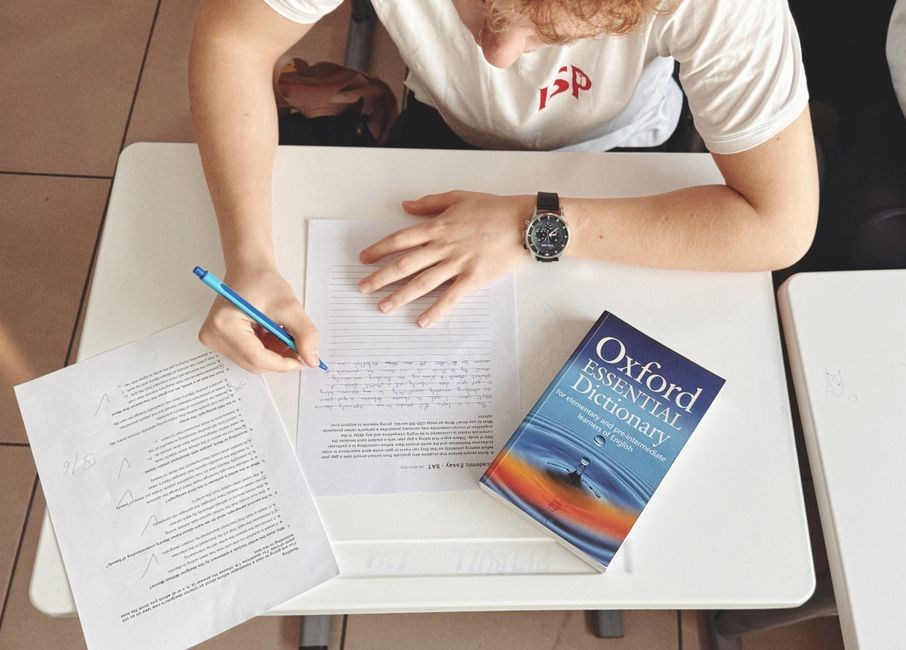
AQA’s GCSE English Language features two papers: Paper 1 evaluates reading and analytical skills, while Paper 2 tests writing and creative expression. Each lasts 1 hour 30 minutes. Assessment objectives emphasize comprehension, critical thinking, and effective communication across texts and media
Paper 1: Reading and Analysis
Paper 1 of the AQA GCSE English Language assessment is a 90‑minute examination that tests students’ ability to read a range of texts and to analyse them critically. The paper is divided into two sections. Section A presents a single text – either a prose passage, a poem, a news article, or a piece of drama – and asks students to answer a series of questions that focus on comprehension, inference, and the identification of key linguistic features. Section B contains two shorter texts, usually one prose and one non‑prose, and requires students to compare and contrast the texts, to evaluate the effectiveness of the author’s language choices, and to discuss how the texts convey meaning in different contexts. The marking scheme rewards clear, structured responses that demonstrate an understanding of the text’s purpose, audience, and rhetorical strategies. Students must use evidence from the text to support their analysis, and the assessment criteria emphasize critical thinking, textual insight, and the ability to articulate arguments in a coherent, well‑organised manner. Preparation for Paper 1 involves practising close reading, annotating passages, and developing the skill of identifying and explaining the impact of literary devices such as imagery, metaphor, and tone. Time management is crucial, as students need to allocate sufficient time to read, plan, and write their responses within the 90‑minute window. Familiarity with past papers and marking schemes helps students understand the expectations and typical question formats, enabling them to target their revision effectively and to achieve a high standard of analytical writing. Additionally, students should practice annotating unfamiliar vocabulary, noting how word choice influences tone, and summarising key points succinctly before drafting their answers. By integrating these techniques, learners can build confidence in tackling the diverse range of texts presented in Paper 1 and demonstrate a sophisticated level of textual analysis that aligns with AQA’s assessment objectives. Teachers often provide guided practice sessions where students dissect sample questions, discuss alternative interpretations, and receive feedback on their analytical depth. This collaborative approach encourages reflective learning and helps students recognise common pitfalls, such as over‑generalisation or failure to link evidence directly to the question. Moreover, the AQA specification emphasises the importance of recognising the author’s perspective and the socio‑cultural context that shapes the text. Students who can situate a text within its historical or contemporary framework demonstrate a higher level of critical engagement, which is rewarded in the marking rubric. Finally, consistent revision using a structured timetable, where students allocate specific days to reading, annotation, and timed practice, ensures that they build a solid foundation of analytical skills that will serve them well throughout the GCSE journey. Familiarity with past papers and marking schemes helps students understand expectations, enabling them to target revision effectively achieve analytical writing!

Paper 2: Writing and Creative Expression
Paper 2 of the AQA GCSE English Language assessment is a 90‑minute writing task that challenges students to produce original prose or creative work. Candidates are presented with a stimulus – such as a photograph, a news headline, or a brief scenario – and must respond with a piece that demonstrates narrative skill, persuasive technique, or descriptive flair. The specification requires a minimum of , with a clear structure, engaging opening, developed body, and satisfying conclusion. Assessment criteria focus on language use, style, and the ability to adapt tone to the intended audience. Students should practise planning by sketching outlines, selecting appropriate diction, and experimenting with varied sentence structures. Effective revision involves reading exemplar responses, noting how writers use imagery, dialogue, and pacing to create impact. Time management is essential; allocating 15–20 minutes for planning, 45 minutes for drafting, and 15 minutes for editing ensures a polished final submission. Teachers often provide targeted prompts that mirror exam conditions, encouraging learners to think critically about purpose and audience. By repeatedly engaging with diverse stimuli and refining their voice, students develop confidence in crafting compelling narratives that meet AQA’s high standards for originality, coherence, and linguistic precision. Consistent practice, coupled with constructive feedback, equips candidates to excel in Paper 2 and showcase their creative potential. Practice consistently to master the craft. daily!!

Key Texts and Themes Covered
Students read Shakespeare’s Hamlet, Dickens’ Great Expectations, and The Great Gatsby and The Handmaid’s Tale, power now.
Themes include self‑authenticity, media’s impact on perception, and ethical dilemmas posed by technology and social media today!
Classical Literary Texts
Students explore a curated set of classic works that showcase linguistic richness and narrative depth. The AQA syllabus highlights pieces that illustrate enduring themes, giving learners a solid base for critical analysis. Key texts include Shakespeare’s Hamlet, a tragedy that probes existential doubt, political intrigue, and the human psyche through eloquent soliloquies and complex character dynamics. The play’s iambic pentameter and rhetorical devices provide a platform for examining diction, metaphor, and dramatic structure.
Another cornerstone is Dickens’s Great Expectations, a novel blending social commentary with a coming‑of‑age arc. Students dissect vivid descriptions, narrative pacing, and moral dilemmas, highlighting class disparity and identity pursuit. The layered narrative invites close reading of foreshadowing, irony, and symbolic elements such as the marshes and Pip’s journey.
George Orwell’s 1984 offers a dystopian lens to interrogate totalitarian control, surveillance, and truth manipulation. The novel’s stark prose and recurring motifs give fertile ground for exploring power, resistance, and individual agency. Analysis of Orwell’s language as a tool of oppression shapes reader perception.
Homer’s The Odyssey, translated into contemporary English, lets learners explore epic storytelling, heroism, fate, and free will. The epic’s structure and motifs serve as a model for narrative analysis and thematic resonance in modern contexts.
Through these works, students experience varied linguistic registers—from Elizabethan to modernist prose—and compare stylistic choices, narrative techniques, and themes across eras. This comparative approach deepens understanding of language evolution while maintaining core human concerns, equipping learners with analytical tools for the AQA GCSE assessment. They also sharpen critical thinking and foster lifelong appreciation for literature, in confidence expression.
Modern Media and Rhetoric
Modern media and rhetoric form the backbone of the AQA English Language GCSE curriculum, offering students a dynamic arena to explore how language persuades, informs, and shapes public discourse. From the clickbait headlines that dominate social feeds to the carefully crafted political speeches that sway elections, learners dissect the mechanics of influence, examining ethos, pathos, and logos in real‑time contexts. By analysing the tone, diction and visual framing of advertisements, news articles, and viral videos, pupils develop a keen awareness of bias, framing, and audience manipulation. The syllabus encourages critical engagement with digital platforms, prompting students to evaluate the ethical dimensions of persuasive communication, such as the responsibility of content creators and the impact of algorithmic curation on information flow. Assessment tasks require students to produce original content—whether an op‑ed, a podcast script, or a social media campaign—that demonstrates mastery of rhetorical strategies while adhering to ethical guidelines. This focus on contemporary media equips learners with transferable skills for academic writing, professional communication, and civic participation, ensuring they can navigate the complex landscape of modern information with confidence and critical insight.
The evolving media landscape demands that learners not only critique content but also create responsibly, balancing persuasive power with factual integrity, fostering media literacy that empowers informed citizenship in a digital age!!

Revision Strategies and Resources
Use focused note‑taking, timed practice, and past papers. Review marking schemes. Engage with apps, flashcards, and peer groups. Create mind maps of rhetorical devices. Summarise articles. Use AQA’s free kits and video tutorials. Test yourself with mock exams daily now!!
Active Note‑Taking Techniques
Active note‑taking transforms passive reading into a dynamic learning process. Begin by skimming the text to identify key themes, then read closely, highlighting unfamiliar words and marking rhetorical devices. Use the Cornell method: divide the paper into cues, notes, and summary sections. In the cues column, jot down questions or keywords that trigger deeper analysis. In the notes section, record concise explanations, paraphrases, and examples. After the session, write a brief summary in your own words, linking ideas and noting any gaps in understanding. Employ visual aids: mind maps, flowcharts, and colour‑coded boxes to represent relationships between characters, settings, and motifs. Practice spaced repetition by revisiting notes weekly, testing recall with flashcards that prompt you to explain concepts without looking. Incorporate peer discussion: explain your notes aloud to classmates, challenging each other to elaborate on interpretations. Finally, link notes to assessment objectives: map each note to the specific AQA criteria, ensuring coverage of analysis, evaluation, and creative expression. This systematic, reflective approach builds depth, retention, and exam readiness. Students should also annotate marginalia with personal reflections, noting how the text resonates with contemporary issues. By integrating cross‑textual references, learners can compare stylistic choices across authors, enhancing critical thinking. Finally, reviewing notes before sleep consolidates memory through subconscious processing, a proven technique for long‑term retention. Keep notes tidy.
Timed Practice and Past Papers
Timed practice is the cornerstone of AQA English Language GCSE preparation. By replicating exam conditions—strict time limits, structured prompts, and the pressure of a ticking clock—students develop pacing, focus, and confidence. Start with a full-length Paper 1 or Paper 2 past paper, setting a timer that matches the official duration: 1 hour 30 minutes for Paper 1 and 1 hour 30 minutes for Paper 2. Record the time taken for each section, then review the results to identify where you lose or gain minutes. Repeat this cycle weekly, gradually reducing the margin of error. Use the official AQA marking schemes to benchmark your answers; compare your responses against the criteria for each assessment objective. Pay special attention to the language and structure of model answers, noting how they balance analysis, evaluation, and creativity. Incorporate targeted practice for weaker areas—if you struggle with rhetorical devices, set a mini‑exercise to identify and explain them within a 10‑minute window. Keep a log of common pitfalls—such as over‑analysis or vague conclusions—and set reminders to avoid them in subsequent attempts. Finally, simulate the full exam environment: sit in a quiet room, use a printed paper, and resist the temptation to consult notes. This disciplined rehearsal trains the mind to perform under pressure, ensuring that when the real exam arrives, you can deliver polished, well‑structured responses within the allotted time. Practice consistently, and your confidence will grow. Everyday.
Marking Schemes and Benchmarking
For AQA English Language GCSE, the official marking schemes provide a transparent framework that links assessment objectives to specific criteria. Each paper contains a detailed rubric that scores from 0 to 4 for each assessment objective, with descriptors that illustrate the progression from basic to advanced responses. Students should download the latest schemes from the AQA website and annotate them with personal notes on common pitfalls and exemplary language use. Benchmarking involves comparing your own answers against the model responses and the associated marks. Begin by marking a past paper yourself, then cross‑check with the published scheme to identify discrepancies. Record the marks achieved for each objective, noting where you consistently score lower. This data informs targeted revision: if your analysis of rhetorical devices falls short, focus on practice exercises that dissect text structure and persuasive techniques. Additionally, use the scheme’s descriptors to refine your language: aim for precise diction, varied syntax, and cohesive arguments that align with the higher descriptors. Regular benchmarking sessions—every two weeks—track progress, ensuring that your marks steadily approach the 4‑point range. By integrating scheme analysis into daily revision, students internalise the expectations, reduce uncertainty, and build confidence in meeting the rigorous AQA standards. Consistent benchmarking transforms practice from guesswork to evidence‑based improvement. Use schemes to guide every answer daily!.