
Ryobi Instruction Manuals: A Comprehensive Guide
Navigating the world of Ryobi tools requires access to reliable documentation. This guide consolidates information regarding locating manuals,
understanding battery systems, and troubleshooting common issues for optimal performance and longevity of your Ryobi power equipment.
Understanding Ryobi Tool Systems
Ryobi’s tool ecosystem centers around its 18V and 36V platforms, offering a broad range of tools powered by compatible batteries and chargers. However, understanding the nuances between these systems is crucial for maximizing usability and avoiding compatibility issues. Essentially, many 18-20V Lithium battery systems share the same underlying battery cells, with variations primarily in the electrical connectors – though most utilize only three.
The 36V system typically employs two 18V batteries connected in series, delivering increased power for demanding applications like line trimmers and certain power tools. This means a single charger isn’t universally compatible; you’ll likely need separate chargers for 18V and 36V tools. Adapters, like those converting Ozito tools to Ryobi compatibility, exist, demonstrating the underlying similarities in battery technology. Temperature monitoring is a key feature, utilized during charging to ensure battery health and prevent overheating.
Furthermore, recognizing that even seemingly different brands can share core components, like batteries, can unlock cost-effective solutions for expanding your tool collection.
Ryobi 18V vs. 36V Systems: Charger Compatibility
A frequent question among Ryobi users concerns charger compatibility between the 18V and 36V systems. The answer, unfortunately, isn’t straightforward. Generally, a Ryobi 18V charger is not compatible with 36V batteries, and vice versa. The 36V tools utilize two 18V batteries connected in series, requiring a charger specifically designed to handle this configuration and voltage.
Purchasing a starter kit with a charger and batteries is often the most economical approach. A typical setup might include one charger and two 5Ah 18V batteries, costing around $75. Alternatively, an Ozito charger paired with 5.2Ah batteries and an Ozito-to-Ryobi adapter presents a cost-effective alternative, though requiring the adapter.
If you own both 18V and 36V Ryobi tools, investing in separate chargers for each system is necessary. This ensures proper charging, prevents damage to the batteries, and maintains optimal tool performance. Ignoring this can lead to reduced battery life and potential safety hazards.
Locating Ryobi Manuals Online
Finding the correct instruction manual for your Ryobi tool is crucial for safe operation and maintenance. Fortunately, several online resources offer access to a comprehensive library of Ryobi documentation. The most reliable source is, naturally, the official Ryobi website, but numerous third-party websites also archive manuals for older or discontinued models.

Before embarking on a search, having the tool’s model number readily available is essential. This number is typically found on a label affixed to the tool itself. Once you have the model number, you can directly search the Ryobi website or utilize search engines with specific keywords like “Ryobi [model number] manual.”
Beyond the official site, various online forums and tool-specific websites often host user-uploaded manuals. However, exercise caution when downloading from unofficial sources to ensure the file is legitimate and free from malware. Registering your Ryobi tool can also unlock access to digital manuals and support resources.
Official Ryobi Website Manual Access
The Ryobi official website provides the most direct and trustworthy access to instruction manuals for their extensive range of tools. Navigating the site is generally straightforward, though the specific layout may evolve over time. Typically, a dedicated “Support” or “Manuals” section is prominently featured on the homepage.
Users can locate manuals through several methods. The most efficient is a direct search using the tool’s model number. Alternatively, manuals are often categorized by product type – for example, drills, saws, pressure washers, or line trimmers. Browsing these categories allows you to pinpoint your tool even without the exact model number.
Once a manual is located, it’s usually available for download as a PDF file. This allows for easy viewing, printing, and storage. The official Ryobi manuals are regularly updated, ensuring you have the latest safety information and operating instructions. Registration of your tool may also provide quicker access to relevant documentation.
Ryobi Manuals via Third-Party Websites
While the official Ryobi website is the preferred source, numerous third-party websites archive and host Ryobi instruction manuals. These can be valuable resources when the official site experiences issues or if you’re seeking older manuals for discontinued models. However, exercising caution is crucial when utilizing these platforms.
Several websites specialize in collecting manuals for various power tools, including Ryobi; These sites often rely on user submissions, meaning the accuracy and completeness of the manuals can vary. Always verify that the manual corresponds to your specific tool model and revision. Look for sites with established reputations and positive user feedback;
It’s essential to be wary of potential malware or viruses when downloading files from unofficial sources. Ensure your antivirus software is up-to-date before downloading any manual. Cross-reference information with the official Ryobi website whenever possible to confirm accuracy and safety. Remember, third-party manuals may not reflect the latest updates or safety revisions.
Ryobi Tool Registration and Manual Access
Registering your Ryobi tools on the official Ryobi website unlocks several benefits, including streamlined access to digital instruction manuals. Creating an account allows you to build a digital inventory of your tools, simplifying warranty claims and providing personalized support. Furthermore, registered users often receive exclusive offers and updates regarding new products and services.
During the registration process, you’ll typically be prompted to enter the model number and serial number of each tool. This information is crucial for accurate manual retrieval and warranty verification. Once registered, you can easily access digital copies of your tool manuals directly from your online account dashboard.
The online manual access offers convenience and ensures you always have the latest version of the documentation. Ryobi frequently updates manuals to reflect design improvements or safety enhancements. Registered users automatically gain access to these updates, ensuring they’re operating their tools with the most current information. This proactive approach enhances safety and maximizes tool performance.
Specific Ryobi Tool Manuals & Information
Locating manuals for specific Ryobi tools often requires a targeted search, as the range of products is extensive. For instance, the Ryobi Pressure Washer (RPW140G) manual is frequently sought after, particularly regarding hose replacements. Users have identified compatible replacement hoses available from suppliers like Statewide Applications, noting that the original OEM hose can be prone to splitting.
Similarly, owners of the Ryobi 36V Split Shaft Line Trimmer and accompanying edger attachment often require specific guidance. Users report successful use of the edger on driveway edges and kerbs, while utilizing the trimmer for broader landscaping tasks. Information regarding the Ryobi Printing Presses (3302/ABDick 9985) is also available, with details on setup for varied media, including thick envelopes, requiring adjustments to plate and blanket packing.
Accessing these specific manuals often involves utilizing the Ryobi website’s search function or exploring third-party resources. Understanding the nuances of each tool, as detailed in its respective manual, is crucial for safe and effective operation.
Ryobi Pressure Washer (RPW140G) Manuals & Hose Replacements
The Ryobi RPW140G pressure washer is a popular model, and access to its manual is vital for proper operation and maintenance. Users frequently search for the manual to understand assembly, safety precautions, and troubleshooting steps. However, a common issue reported by owners is the susceptibility of the original equipment manufacturer (OEM) hose to splitting, particularly due to a lack of kink resistance.
Finding a suitable replacement hose is often a priority. Several users have successfully sourced replacements from suppliers like Statewide Applications in Australia, specifically identifying the Ryobi pressure cleaner hose (RPW140-G/RPW140SC ─ 099903013053) as a compatible option. Bunnings, a major hardware retailer, is also a potential source, though online inquiries may be necessary to confirm availability.
When replacing the hose, it’s crucial to ensure compatibility with the RPW140G model. The manual provides detailed diagrams and specifications to aid in this process. Proper hose installation and care, as outlined in the manual, will help prevent future issues and extend the lifespan of your pressure washer.
Ryobi Line Trimmers & Edgers (36V Split Shaft) Manuals
Ryobi’s 36V split shaft line trimmer offers versatility with its accompanying edger attachment, but understanding its operation requires the official instruction manual. The manual details safe usage, proper line loading, and maintenance procedures specific to this model. Users often seek the manual to clarify attachment changes and optimize performance for different tasks.

Practical experience reveals limitations in the edger’s application. Owners report the edger attachment is most effective for driveway edges and street kerbs, while the trimmer head excels in handling general lawn trimming. The manual provides guidance on correctly installing and removing the edger attachment, ensuring a secure connection for safe operation.
Proper maintenance, as detailed in the manual, is crucial for longevity. This includes cleaning the trimmer head, checking the line feed mechanism, and inspecting the split shaft for any signs of damage. Referencing the manual will help users maximize the efficiency and lifespan of their 36V Ryobi line trimmer and edger combination.
Ryobi Printing Presses (3302/ABDick 9985) Manuals & Setup
The Ryobi 3302, also known as the ABDick 9985, requires a comprehensive understanding of its setup and operation, best obtained through the official instruction manual. These manuals detail the press’s mechanics, controls, and recommended procedures for achieving optimal print quality. Initial setup often involves adjusting plate settings and blanket packing for specific stock thicknesses.
Users transitioning to this press often encounter challenges with envelope printing. One reported configuration involved using 1/8 inch felt packing behind the plate, maximizing plate setting to 0.30, and adding a 30lb paper sheet behind the blanket to accommodate thick envelopes. The manual provides detailed guidance on these adjustments.

Proper setup is critical for consistent results. The manual will outline procedures for ink adjustments, roller settings, and registration controls. Understanding these settings is vital for short-run jobs (1000 sheets or less) and achieving high production speeds (up to 15,000 sheets per hour) with features like non-stop feeders and delivery systems.
Battery and Charger Information

Ryobi’s battery and charger systems are central to the functionality of their cordless tools, and understanding their nuances is crucial for optimal performance and safety. The core of the system revolves around 18V and 36V batteries, often marketed as 20V, which share a common battery platform. Ryobi manuals detail specific battery capacities (like 5Ah) and their corresponding charger requirements.
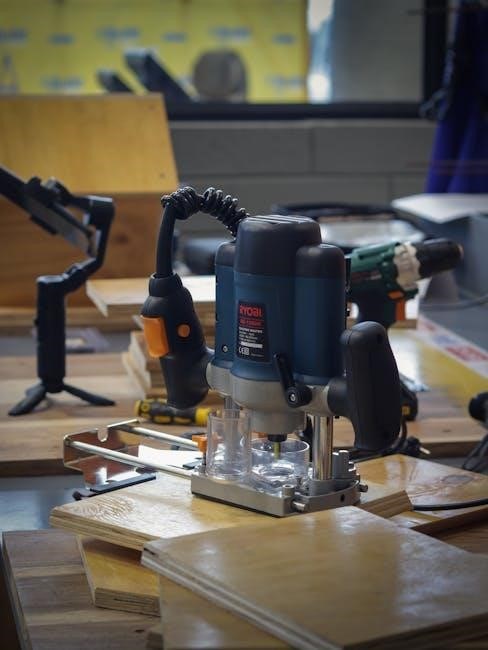
Compatibility between chargers and batteries is a frequent concern. Owning both 18V and 36V tools may necessitate purchasing separate chargers, as they are not universally interchangeable. The manuals clearly outline which chargers are compatible with which battery voltages. Furthermore, the system incorporates temperature monitoring to protect batteries during charging and operation.

Interestingly, despite marketing variations, many Ryobi and Ozito (with an adapter) batteries utilize the same underlying battery cells. While connector configurations vary, most implement only three essential connections: positive, negative, and temperature sensing. Refer to the manual for detailed information on charger types and battery care to maximize lifespan and efficiency.
Ryobi Battery Compatibility (18V/20V Systems)
Ryobi’s 18V and 20V battery systems are designed for broad compatibility, simplifying tool ownership and reducing costs. Despite the “20V” marketing designation, these batteries are fundamentally 18V, and function seamlessly across a vast range of Ryobi tools. Ryobi manuals consistently emphasize this interchangeability, allowing users to utilize the same battery across multiple tools.
However, it’s important to note that while the batteries are compatible, performance may vary depending on the tool’s voltage requirements. A 5Ah 18V battery will power both an 18V drill and a 36V line trimmer, but the latter may experience reduced runtime. The manuals provide guidance on expected runtime based on battery capacity and tool usage.
Furthermore, compatibility extends to other brands like Ozito, with the use of a readily available adapter. This allows users to leverage existing Ozito batteries with Ryobi tools, and vice versa. Ryobi manuals don’t directly address Ozito compatibility, but user experience confirms its functionality. Understanding these nuances ensures optimal tool performance and battery management.
Understanding Ryobi Charger Types
Ryobi offers a variety of chargers designed to accommodate their 18V/20V battery systems, each with varying features and charging speeds. Ryobi instruction manuals detail these differences, helping users select the appropriate charger for their needs. Standard chargers typically provide a full charge in several hours, while rapid chargers significantly reduce charging time.
The manuals emphasize the importance of using a Ryobi-approved charger to avoid damaging the battery or creating a safety hazard. Third-party chargers are not recommended and may void the warranty. Ryobi chargers also incorporate temperature monitoring, preventing overcharging and ensuring optimal battery health. This feature is often highlighted in the safety sections of the manuals.
Notably, a single Ryobi 18V charger can power both 18V and 20V batteries. However, when considering a 36V tool, users may require a dedicated 36V charger, as indicated in the tool’s specific manual. Understanding these distinctions, as outlined in the Ryobi documentation, is crucial for efficient battery management and tool operation.
Ryobi Battery Temperature Monitoring
Ryobi instruction manuals consistently emphasize the integrated temperature monitoring system within their batteries and chargers. This crucial safety feature protects both the battery and the user by preventing damage from extreme temperatures. The system actively monitors battery temperature during charging and operation, adjusting the charging process or halting it altogether if temperatures fall outside the safe operating range.
Manuals detail that excessively cold or hot batteries may not charge or operate correctly. Allowing the battery to reach a moderate temperature before use is recommended. This monitoring isn’t just for charging; it also impacts tool performance, potentially reducing power output in extremely cold conditions.
The temperature monitoring utilizes up to five electrical connectors, though most systems implement only three – voltage, current, and temperature. Ryobi manuals clearly explain that this feature is a key component of their battery management system, contributing to extended battery life and enhanced safety. Ignoring these guidelines, as detailed in the documentation, can lead to premature battery failure or potential hazards.
Troubleshooting Common Ryobi Tool Issues

Ryobi instruction manuals dedicate significant sections to troubleshooting, recognizing that even well-maintained tools can encounter problems. Common issues often relate to battery connectivity, with manuals advising users to ensure a secure connection and check for damaged terminals. Another frequent concern is reduced tool performance, which can stem from low battery charge, overheating, or a clogged air vent – all addressed in the documentation.
For pressure washers, manuals detail troubleshooting steps for low pressure, including checking the nozzle for blockages and verifying the water supply. Line trimmers and edgers often experience line feed issues, and manuals provide guidance on disassembling and cleaning the spool. Regarding printing presses (Ryobi 3302/ABDick 9985), manuals emphasize checking plate settings and packing as initial troubleshooting steps.
Ryobi manuals consistently recommend consulting the specific troubleshooting section for each tool, as solutions vary widely. They also advise against attempting repairs beyond one’s skill level, suggesting professional service when necessary. Ignoring these guidelines can void the warranty and potentially cause further damage.
Ryobi Tool Repair Resources
While Ryobi instruction manuals offer troubleshooting guidance, more complex issues often necessitate professional repair. Ryobi’s official website provides a service locator, helping users find authorized repair centers in their region. These centers employ trained technicians familiar with Ryobi tools and have access to genuine replacement parts.
However, a thriving online community exists for Ryobi enthusiasts, with forums and video tutorials offering repair advice and parts sourcing. These resources can be valuable for DIY repairs, but caution is advised, as improper repairs can void the warranty and create safety hazards. For specialized tools like the Ryobi 3302 printing press, finding qualified technicians may require contacting printing equipment specialists.
Some third-party websites also offer Ryobi repair services, but verifying their credentials and reputation is crucial. Ryobi manuals often include exploded diagrams, aiding in parts identification for both professional and DIY repairs. Remember to always disconnect the battery before attempting any repair work to prevent accidental activation.
Ryobi Warranty Information & Manuals
Ryobi tools are generally covered by a manufacturer’s warranty, protecting against defects in materials and workmanship. The warranty period varies depending on the tool and region, but typically ranges from one to three years. Registering your Ryobi tool upon purchase is crucial for warranty validation and allows Ryobi to notify you of important updates and recalls.

Ryobi instruction manuals often contain detailed warranty information, including specific terms and conditions. Retaining your proof of purchase is essential for any warranty claim. The official Ryobi website provides access to warranty statements and claim forms. Unauthorized repairs or modifications can void the warranty, emphasizing the importance of using authorized service centers.
Accessing the correct manual is vital for understanding your tool’s warranty coverage. Ryobi’s online manual database allows users to download manuals based on model number. Understanding the warranty limitations ensures realistic expectations and proper tool maintenance, maximizing its lifespan and performance.
Adapters and Compatibility (Ozito to Ryobi)
A notable aspect of Ryobi’s 18V/20V system is its broad compatibility with other brands, particularly Ozito. Adapters are available that allow Ozito tools to operate on Ryobi batteries, and vice versa, offering cost-effective solutions for users with existing tool collections. These adapters typically address the differing electrical connector configurations between the two systems.
While the core battery technology is often similar – utilizing lithium-ion cells – the external connections and communication protocols differ. The Ozito to Ryobi adapter bridges this gap, enabling seamless power transfer. Users report successful operation of Ozito rotary tools on Ryobi batteries using these adapters. However, it’s important to note that not all features may be fully compatible when using an adapter.
Temperature monitoring and advanced battery management features might not function correctly with adapted batteries. Despite these limitations, adapters provide a convenient way to expand tool options without investing in entirely new battery platforms. Always prioritize safety and ensure the adapter is properly installed before use.