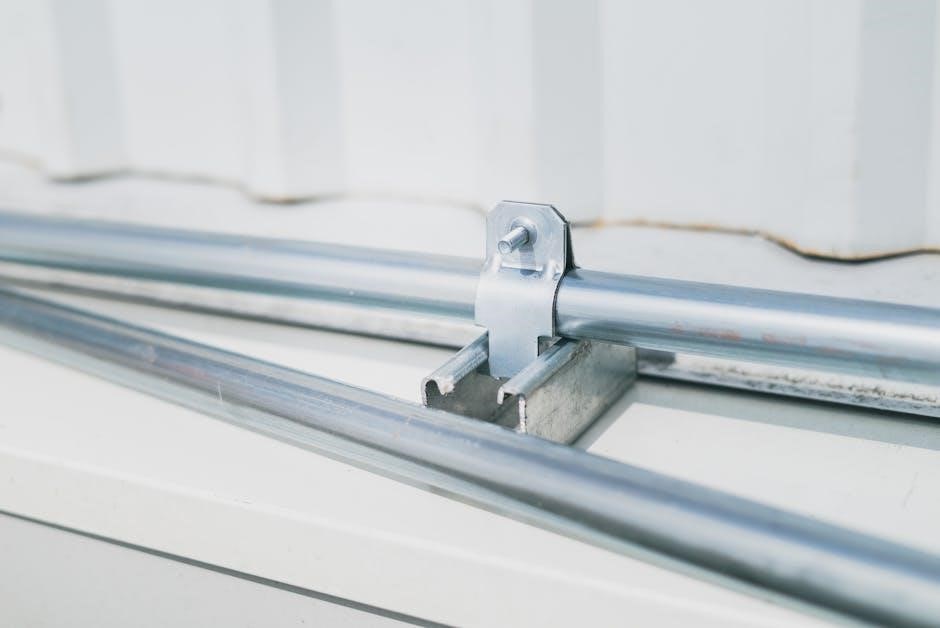
Navigating the world of pipe cutting demands precision, safety, and the right tools – from manual hacksaws to advanced laser cutters, ensuring clean, accurate results.
Pipe cutting is a fundamental skill across numerous industries, from plumbing and construction to manufacturing and welding. Achieving precise cuts is crucial for ensuring proper fitting, preventing leaks, and maintaining structural integrity. This guide explores the diverse landscape of pipe cutting techniques, encompassing both manual and power tool methods. Selecting the appropriate tool and technique depends heavily on the pipe material – whether it’s metal like steel or copper, or plastic such as PVC and PEX.
Understanding the nuances of each material and employing the correct blade or cutting wheel is paramount for a successful outcome.
Safety Precautions When Cutting Pipes
Prioritizing safety is paramount when cutting pipes. Always wear appropriate personal protective equipment (PPE), including safety glasses to shield against flying debris, gloves for enhanced grip and hand protection, and hearing protection when using power tools. Ensure the pipe is securely clamped to prevent movement during cutting. Be mindful of the cutting tool’s blade or wheel, avoiding contact with skin.
When working with metal pipes, be aware of potential sparks and flammable materials nearby. Proper ventilation is crucial, especially when cutting plastics.
Types of Pipes and Corresponding Cutting Methods
Selecting the correct cutting method hinges on the pipe material. Metal pipes – steel, copper, and stainless steel – often require hacksaws, rotary cutters, or reciprocating saws with metal-cutting blades. Plastic pipes (PVC, CPVC, PEX, ABS) are typically cut with pipe cutters (wheel or scissor-type) or specialized saws designed to prevent crushing.
Laser pipe cutters excel at precision cuts across various pipe types, offering versatility for round and profile pipes.
Metal Pipes (Steel, Copper, Stainless Steel)
Cutting metal pipes – steel, copper, or stainless steel – demands robust tools and techniques. Hacksaws, employing the correct teeth per inch (TPI) blade, are a common choice. Rotary pipe cutters offer speed and accuracy, while reciprocating saws with metal-cutting blades handle larger diameters.
Ensuring square cuts is crucial, especially for welding preparation. Laser pipe cutters provide high-quality, precise metal cuts for various profiles.
Plastic Pipes (PVC, CPVC, PEX, ABS)
Cutting plastic pipes like PVC, CPVC, PEX, and ABS requires a different approach than metal. Avoiding crushing or deformation is paramount. Pipe cutters – wheel-type or scissor-type – are ideal, providing clean cuts without damaging the material. The MasterProf Semi-Automatic Alpex Pipe Cutter excels with PPRC, PEX, and alpex pipes.
Sharp blades with a specific tooth design are essential for preventing jagged edges and ensuring a proper fit.
Manual Pipe Cutting Tools
Manual pipe cutting tools offer a cost-effective and portable solution for various applications. Hacksaws, utilizing metal-cutting blades, are versatile for different pipe materials. Pipe cutters, available in wheel-type and scissor-type designs, provide cleaner, more precise cuts, especially for plastic pipes.
Pipe wrenches play a crucial preparatory role, securing the pipe during cutting. These tools demand physical effort but deliver reliable results when chosen and used correctly.
Hacksaws for Pipe Cutting
Hacksaws represent a fundamental manual tool for pipe cutting, offering versatility across various metal types. Selecting the appropriate blade – considering teeth per inch (TPI) and material – is crucial for efficient cutting. Finer TPI blades suit thinner materials, while coarser blades tackle thicker pipes.
Proper technique, including consistent pressure and stroke direction, minimizes effort and ensures a cleaner cut. Hacksaws are a reliable, portable option for occasional pipe work.
Pipe Cutters (Wheel-Type & Scissor-Type)
Pipe cutters, available in wheel and scissor varieties, provide cleaner, more precise cuts than hacksaws, particularly for softer metals like copper and plastic. Wheel-type cutters utilize a rotating wheel to score and sever the pipe, while scissor-type cutters employ opposing blades.
These tools minimize burr formation and deformation, crucial for welding and fitting applications. Proper sizing to the pipe diameter is essential for optimal performance and a square cut.
Pipe Wrenches & Their Role in Preparation
Pipe wrenches, though primarily for gripping and turning, play a vital preparatory role before cutting. They securely hold the pipe during marking and initial scoring, preventing movement that compromises cut accuracy. Different types exist – straight, offset, and adjustable – each suited for varying access and pipe sizes.
Using a pipe wrench correctly minimizes damage to the pipe’s surface, ensuring a clean starting point for cutting tools like hacksaws or pipe cutters.
Power Tools for Pipe Cutting
Power tools significantly accelerate pipe cutting, especially for larger projects or tougher materials. Rotary pipe cutters offer consistent, hands-free cutting, ideal for high-volume work. Reciprocating saws, equipped with metal-cutting blades, provide versatility for various pipe types and access situations.
Laser pipe cutters represent the pinnacle of precision, capable of intricate cuts on round and profile pipes, ensuring high-quality results for demanding applications.
Rotary Pipe Cutters
Rotary pipe cutters utilize a rotating blade to progressively cut through the pipe wall, offering a hands-free operation once positioned correctly. These tools are particularly effective for steel and copper pipes, delivering clean, consistent cuts with minimal burr formation. They excel in situations requiring repetitive cuts, boosting efficiency.
Proper blade selection and consistent pressure are crucial for optimal performance, ensuring a smooth and accurate cutting process.
Reciprocating Saws with Metal-Cutting Blades
Reciprocating saws, equipped with specialized metal-cutting blades, provide versatility for cutting various pipe materials, including steel and thicker-walled metal pipes. Their aggressive cutting action makes them suitable for demolition work or situations where precision isn’t paramount. However, achieving square cuts requires skill and a steady hand.
Blade selection – specifically TPI (teeth per inch) – is vital for clean cuts and minimizing material deformation.
Laser Pipe Cutters – Precision and Applications
Laser pipe cutters represent a pinnacle of precision in pipe fabrication. These advanced tools excel at creating parts from round, profile, angle, and channel pipes, delivering high-quality metal cuts with minimal burr formation. Their applications span industries demanding tight tolerances and complex geometries.
They are ideal for preparing pipes for welding, offering clean bevels and accurate dimensions, significantly improving weld quality and reducing rework.
Specific Pipe Cutting Techniques
Achieving optimal results requires tailored techniques for each pipe material. Cutting copper pipe necessitates deburring and careful preparation to ensure smooth connections. Steel pipe demands techniques guaranteeing square cuts, crucial for welding integrity.

Plastic pipe, like PVC, requires methods that avoid crushing or deformation, preserving its structural integrity and flow capacity. Proper technique minimizes waste and maximizes efficiency.

Cutting Copper Pipe – Deburring and Preparation
Precise copper pipe cutting demands meticulous preparation. After cutting, deburring the inside and outside edges is critical, removing sharp fragments that can obstruct flow and damage fittings. A deburring tool ensures a smooth, clean edge.
Preparation includes cleaning the pipe’s exterior with emery cloth for optimal solder adhesion. Proper alignment and a square cut are essential for leak-proof joints, guaranteeing a reliable plumbing system.
Cutting Steel Pipe – Ensuring Square Cuts
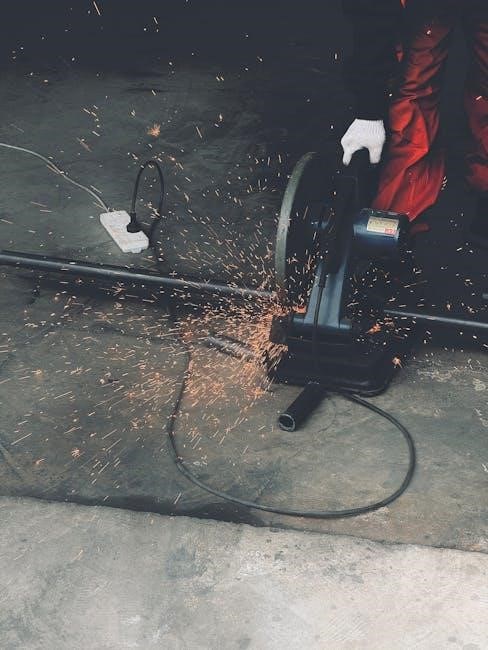
Achieving square cuts on steel pipe is paramount for successful welding and threading. Utilize a pipe cutter or reciprocating saw with a metal-cutting blade, maintaining a 90-degree angle throughout the process.
Consistent pressure and a stable cutting setup are vital. After cutting, deburr the edges thoroughly to remove any burrs or sharp edges that could compromise joint integrity and weld quality, ensuring a robust connection.
Cutting Plastic Pipe – Avoiding Crushing and Deformation
Plastic pipes, like PVC and PEX, require a delicate touch to prevent crushing or deformation during cutting. Employ a pipe cutter specifically designed for plastic, or a hacksaw with fine-tooth blades.
Rotate the pipe while cutting, applying gentle, even pressure. Avoid excessive force, which can distort the pipe’s shape. A ratcheting pipe cutter is ideal for controlled cuts, maintaining a clean edge without compromising the pipe’s integrity for a secure fit.
Deburring and Reaming Pipes
After cutting any pipe, deburring and reaming are crucial steps for ensuring smooth connections and preventing damage to fittings. Burrs – the sharp edges left after cutting – can obstruct flow and compromise joint integrity;
Utilize a deburring tool or reamer, rotating it internally and externally along the pipe’s cut edge. This removes sharp fragments and creates a clean, consistent opening, vital for welding, threading, or fitting applications, ultimately enhancing system performance and longevity.
Pipe Bevelling Techniques
Pipe bevelling prepares pipe ends for welding, creating an angled surface that allows for deeper weld penetration and stronger joints. Manual bevelling tools, like hand-held grinders or files, are suitable for smaller projects, demanding skill for consistent angles.
Automated bevelling machines offer precision and efficiency for larger-scale operations. Proper bevelling ensures complete fusion, minimizing the risk of weld defects and maximizing the structural integrity of the welded pipeline system, crucial for industrial applications.
Choosing the Right Blade for the Job
Selecting the correct blade is paramount for efficient and clean pipe cutting. Metal cutting blades are defined by their Teeth Per Inch (TPI); higher TPI for thinner materials, lower for thicker ones. Blade material – high-speed steel or bi-metal – impacts durability and cutting speed.

Plastic cutting blades require a different approach, featuring specialized tooth designs to prevent melting or crushing. Fine-tooth blades are ideal for PVC, while coarser teeth suit ABS. Always prioritize blade sharpness for optimal performance and safety.
Metal Cutting Blades – TPI and Material
Understanding Teeth Per Inch (TPI) is crucial when selecting metal cutting blades. Higher TPI blades (24-32) excel with thinner metals like sheet steel or copper, providing finer cuts. Lower TPI blades (14-18) are better suited for thicker materials – steel pipes – offering faster material removal.

Blade material significantly impacts performance; high-speed steel (HSS) is cost-effective, while bi-metal blades combine HSS teeth with a flexible backing for increased durability and resistance to breakage during demanding cuts.
Plastic Cutting Blades – Tooth Design
Plastic cutting blades differ significantly from metal-cutting blades, prioritizing a clean cut without causing cracking or deformation. Fine-tooth blades with a high TPI (typically 10-12) are preferred for plastics like PVC, CPVC, and PEX. These blades utilize a specialized tooth geometry – often featuring a reverse angle – to shear the plastic rather than tear it.
Aggressive tooth designs can melt or crush plastic, so selecting blades specifically engineered for plastic pipe is essential for achieving professional results and preventing damage.
Automatic and Semi-Automatic Pipe Cutters
Automatic and semi-automatic pipe cutters enhance efficiency and precision, particularly in high-volume applications. The MasterProf Semi-Automatic Alpex Pipe Cutter simplifies cutting PPRC, PEX, and alpex pipes ranging from 16-42mm, offering user-friendly operation and consistent results.
DEWALT’s IMPACT CONNECT system introduces a new line of attachments, converting impact drivers into versatile pipe-cutting tools. These systems minimize manual effort and deliver faster, cleaner cuts, improving productivity on job sites.
MasterProf Semi-Automatic Alpex Pipe Cutter
The MasterProf Semi-Automatic Alpex Pipe Cutter stands out as a convenient and easy-to-use tool specifically engineered for cutting PPRC, PEX, and alpex pipes. Its design accommodates pipe diameters ranging from 16 to 42 millimeters, making it versatile for various plumbing and heating projects.
This cutter streamlines the cutting process, reducing manual effort while ensuring clean, burr-free cuts. It’s an ideal solution for professionals and DIY enthusiasts seeking efficiency and precision in their pipework.
DEWALT IMPACT CONNECT System for Pipe Cutting

DEWALT, a leading provider of job site solutions, has introduced the innovative IMPACT CONNECT system. This new line of attachments is designed to quickly convert select impact drivers into specialized tools, including those for pipe cutting applications.
The system enhances versatility and efficiency on the job site, allowing users to adapt their existing impact tools for a wider range of tasks. This reduces the need for multiple dedicated tools, saving both time and money;
Pipe Cutting for Welding Preparation
Precise pipe cutting is crucial for successful welding. Ensuring square, clean cuts minimizes gaps and misalignment, leading to stronger, more reliable welds. Proper preparation involves selecting the correct cutting method – whether using a rotary cutter, reciprocating saw, or specialized bevelling machine – based on pipe material and thickness.
Accurate cuts and appropriate bevelling angles are essential for achieving optimal weld penetration and fusion. Utilizing dedicated tools for tube and pipe weld preparation further enhances accuracy and efficiency.
Tools for Tube and Pipe Weld Preparation
Comprehensive weld preparation requires specialized tools beyond basic pipe cutters. This includes both internal (ID) and external (OD) clamping tools to securely hold the pipe during bevelling and cutting. Specialty saws designed for precise tube and pipe cutting are also vital, ensuring clean, accurate angles.
These tools facilitate consistent bevels, crucial for optimal weld penetration. Investing in quality preparation tools significantly improves weld integrity and reduces rework, ultimately enhancing project efficiency and safety.
Troubleshooting Common Pipe Cutting Issues
Pipe deformation during cutting can occur, especially with thinner-walled materials; proper support and blade selection are key to prevention. Burr formation is another frequent issue, necessitating deburring tools for smooth, safe connections. Addressing these promptly ensures accurate fitting and welding.
Consistent pressure and the correct cutting speed minimize deformation. Selecting blades with appropriate tooth pitch and sharpness reduces burr creation, streamlining the overall process.
Dealing with Pipe Deformation
Pipe deformation, like ovalization or flattening, frequently happens during cutting, particularly with plastic or thin-walled metal pipes. Consistent, even pressure during the cut is crucial; avoid forcing the blade. Utilizing a pipe cutter with a firm grip and rotating the pipe, not the cutter, helps maintain roundness.
Proper support around the cutting area prevents bending. For stubborn cases, gentle reshaping with specialized tools might be necessary before fitting or welding.
Preventing Burr Formation
Burr formation is a common issue when cutting pipes, creating sharp edges that hinder smooth connections. Employing sharp, high-quality blades significantly reduces burring. Maintaining a consistent cutting speed and avoiding excessive force are also vital. When using power tools, select blades specifically designed for the pipe material.
Regular blade inspection and replacement are essential. Even with precautions, deburring tools are necessary to remove any remaining imperfections for safe and effective joining.
Pipe Cutting Measurement and Marking
Accurate measurement and precise marking are foundational to successful pipe cutting; Utilize a reliable measuring tape or ruler, and always double-check your measurements before marking the cut line. Employ a specialized pipe marking tool or a fine-tipped marker for clear, visible lines.
Consider pipe wall thickness when marking, ensuring the cut falls precisely where intended. A square or appropriate jig helps guarantee perpendicularity, crucial for welding and fitting applications.
Impact of Cutting Tools on Industrial Production
Cutting tools are essential for efficient industrial production, directly impacting output quality and speed. Precision cutting minimizes waste, reduces rework, and ensures components fit specifications. Advanced tools, like laser pipe cutters, enable complex geometries and high-volume production.
Investing in quality cutting tools boosts productivity, lowers operational costs, and enhances overall manufacturing competitiveness. Proper tool maintenance and selection are vital for sustained performance and safety.
Resources and Further Learning
For specialized pipeline equipment and comprehensive solutions, Tremco Pipeline Equipment and Sawyer Manufacturing offer valuable resources and expertise. Understanding fitting tools – wrenches, pliers, and spanners – is crucial; explore guides detailing their proper use and maintenance.
Further knowledge can be gained by researching advancements in automatic and semi-automatic pipe cutters, like the MasterProf and DEWALT IMPACT CONNECT systems, to optimize your workflow.
Tremco Pipeline Equipment and Sawyer Manufacturing
Tremco Pipeline Equipment and Sawyer Manufacturing stand as key providers within the industry, offering a full line of tools essential for both tube and pipe weld preparation; Their catalogs include specialized saws, alongside both internal and external clamping tools designed for precision.
These companies cater to professionals seeking high-quality equipment, supporting efficient and reliable pipe cutting and preparation processes for various industrial applications.
Understanding Fitting Tools (Wrenches, Pliers, Spanners)
Essential for any pipework project, fitting tools like wrenches, water-pump pliers, and spanners are crucial for securely tightening and loosening nuts and bolts. Pipe wrenches, monkey wrenches, and adjustable wrenches offer versatility for different fitting sizes and materials.
Proper tool selection ensures efficient assembly and prevents damage to pipes and fittings, contributing to a leak-proof and durable system.